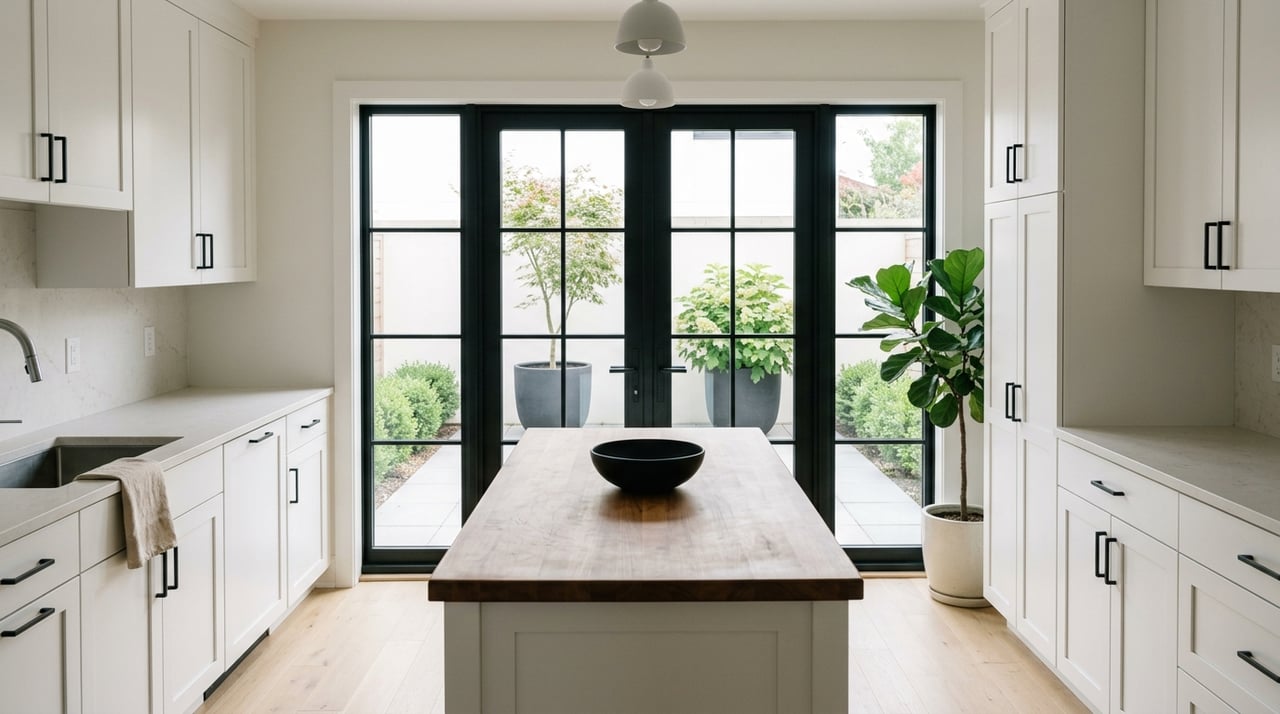
Fayetteville Townhome vs. House: How to Choose
June 18, 2026
June 18, 2026
Trying to choose between a townhome and a house in Fayetteville? You are not alone. With housing costs rising, inventory pressures still shaping the market, and more buyers looking for the right balance of budget, maintenance, and lifestyle, this decision matters more than ever. The good news is that there is no one-size-fits-all answer, and a clear side-by-side comparison can make your next step much easier. Let’s dive in.
Fayetteville gives you two very different ownership experiences. On one side, detached single-family homes remain the dominant local option. On the other, townhomes and similar attached housing offer a smaller but important segment, especially in infill and corridor areas.
The city’s 2023 housing assessment shows that half of occupied housing units are single-family detached, and nearly all owner-occupied homes fall into that category. From January 2014 through September 2023, Fayetteville recorded 4,945 single-family permits compared with 611 townhouse permits. That tells you detached homes still make up the broadest local product, while townhomes tend to be more targeted.
At the same time, Fayetteville is actively planning for more housing variety. City housing materials say supply has not kept up with population growth, vacancy is low, costs are rising, and the city needs more than 1,000 additional housing units per year. Long-range planning also supports infill, more attainable housing, and limiting sprawl, which helps explain why attached housing keeps showing up in selected areas.
A townhome can be a practical fit if you want a lower entry point and a simpler day-to-day footprint. In Fayetteville’s current market snapshot, the year-to-date median sales price reported for townhouse and condo properties was $159,000. That compares with $240,000 for existing single-family homes and $377,425 for new-construction single-family homes.
That price gap is one reason many first-time buyers, relocators, and busy households start here. If your top goals are ownership, predictable space, and less exterior work, a townhome may check a lot of boxes. It can also free up room in your budget for updates, furnishings, or future plans.
Location is another draw. In Fayetteville, attached housing often appears in infill-oriented settings like Downtown, Walker Park, and certain corridor areas. That can mean a more compact footprint and easier access to established parts of the city, though every project is different.
If you want more control over your property, a detached house often feels like the more flexible choice. You usually get more private outdoor space, more room for storage, and fewer shared elements to coordinate with neighbors or an association. For many buyers, that extra breathing room is a major quality-of-life factor.
Parking is another reason buyers lean toward houses. Fayetteville’s parking standards list minimum off-street parking at 2.0 spaces per dwelling unit for single-family, duplex, and triplex homes. For multifamily or townhouse uses, the standard is 1.0 space per bedroom, which can create a different parking setup depending on the project.
A house may also offer the broadest resale audience. Since nearly all owner-occupied housing in Fayetteville is single-family detached, this product type lines up with what the local market already buys most often. If long-term resale flexibility is high on your list, that matters.
Many buyers assume townhome automatically means low maintenance. Sometimes that is true, but only if the ownership structure and HOA documents actually shift those responsibilities away from you. That is one of the biggest details to verify before you decide.
With a single-family house, you are usually responsible for the roof, siding, yard, fence, driveway, and other exterior upkeep. That gives you control, but it also means you carry the full maintenance load. If you enjoy managing your property, that may feel like a benefit rather than a burden.
With a townhome, the practical question is simple: what do the dues cover? Fayetteville notes that attached homes may be organized through a condominium association, horizontal property regime, fee simple structure, or something similar. Under Arkansas law, co-owners in a horizontal property regime contribute pro rata to administration, maintenance, and repair expenses for common elements.
Before you buy a townhome, ask for clear answers on these items:
If the HOA covers major exterior items well, a townhome can deliver the lower-maintenance lifestyle many buyers want. If not, it may feel much closer to house ownership than you expected.
Your daily routine should drive this decision just as much as the price tag. If you picture yourself wanting a larger yard, gardening space, room for pets, a bigger driveway, or more garage flexibility, a single-family house will usually fit better. In Fayetteville, that is often one of the clearest lifestyle differences.
Townhomes often trade yard size for convenience and a smaller footprint. In Fayetteville’s infill-oriented settings, that can mean less private outdoor space and more shared areas. For some buyers, that is a welcome trade. For others, it becomes a downside over time.
It also helps to think about where you are buying. The city has residential parking permits in the Entertainment District and Wilson Park South Neighborhood District, which may matter more if you are considering attached housing near downtown or the university area. If guest parking, street parking, or extra vehicles are part of your normal life, ask detailed questions early.
A lower purchase price does not always mean lower ownership cost, and a higher price does not always mean worse value. To compare a townhome and a house fairly, look at the whole monthly picture. That includes mortgage payment, taxes, insurance, utilities, dues, and maintenance.
In Fayetteville, affordability pressure remains real. The city says housing stock has not kept up with growth, and the gap between housing costs and household incomes is widening. That context makes it even more important to choose the property type that fits your budget comfortably, not just today but over the next few years.
Property taxes are part of that calculation. Washington County says Arkansas assesses property at 20% of market value, and homeowners may claim a homestead credit on a primary residence. Beginning with 2026 tax bills, the credit is up to $600, with additional relief available for some owners age 65 or older or disabled.
A simple way to compare options is to list the likely recurring costs side by side:
| Cost Factor | Townhome | House |
|---|---|---|
| Purchase price | Often lower entry point | Often higher entry point |
| HOA dues | Common in many projects | May or may not apply |
| Exterior maintenance | May be shared or covered | Usually owner responsibility |
| Yard care | Often limited | Usually owner responsibility |
| Parking flexibility | Project-specific | Often greater flexibility |
| Private outdoor space | Usually smaller | Usually larger |
If you are thinking ahead to resale, both property types can work well, but they appeal to different audiences. Detached homes likely have the broadest buyer pool in Fayetteville because they dominate the owner-occupied market. That can support long-term flexibility when it is time to sell.
Townhomes are more niche, but niche does not mean weak. Fayetteville’s long-range planning and corridor strategies suggest ongoing demand for well-located attached housing, especially where buyers value walkability, a compact footprint, and less exterior upkeep. A well-positioned townhome can still make strong sense if it matches the right buyer profile.
This is also where presentation matters. If you eventually sell, condition, finish choices, and how the space lives day to day can strongly affect buyer confidence. In a more compact home especially, thoughtful updates and clean design choices can help buyers see value faster.
If you feel torn, focus on the trade-offs you will live with every week. Most buyers are not really choosing a building type. They are choosing a lifestyle, a maintenance level, and a financial comfort zone.
A townhome may be the better fit if you want:
A house may be the better fit if you want:
If you are comparing specific properties, it can help to go beyond the listing sheet. Look at the monthly cost, HOA structure, parking reality, yard use, and how each property supports your routine. A beautiful kitchen or fresh paint job matters, but the better choice is the one that fits how you actually want to live.
In Fayetteville, both options have a place. The right answer depends on whether you value lower entry cost and lower-maintenance potential more than space, privacy, and flexibility.
If you want help comparing homes in Fayetteville through both a market and design lens, Sammie Beaver can help you weigh layout, upkeep, resale potential, and renovation possibilities so you can buy with confidence.



Whether you're buying, selling, building, or simply exploring your options, I’m here to offer personalized guidance, creative insight, and local expertise every step of the way.
Address
809 S 52ND ST
ROGERS AR 72758