The Centerton Saturday You Didn't Know You Already Had
August 20, 2026
August 20, 2026
Ask a Centerton city planner what downtown looks like right now and you'll get an honest answer: not much. Mayor Bill Edwards has said the city lacks anything you'd call a real downtown, just one short block of businesses and a former city hall building. It's part of the reason Centerton spent 2025 and 2026 working through a formal master planning process with the Urban Land Institute to build something bigger from scratch.
That's the official story. It's also not the whole story, because if you already live here, the raw material for a good Saturday has been sitting in plain view the entire time. It's just never been written down as a loop. Here's what that loop actually looks like, block by block, before the bulldozers south of Centerton Boulevard change the math entirely.
Most of the conversation about Centerton's future centers on the 830-acre New Town Center study area the city mapped out south of Centerton Boulevard as of the June 2026 downtown plan update, an area that grew from the roughly 400 acres planners first floated in 2025. But tucked inside that same footprint, right now, is something that already works: the C.B. "Charlie" Craig State Fish Hatchery, run by the Arkansas Game and Fish Commission, sits adjacent to existing neighborhoods near Fair Street and Centerton City Park, close to the land the Bentonville School District uses for Grimsley Junior High.
The hatchery property is open to foot traffic for walking or jogging between dawn and dusk every day. It's been used historically for community fishing. None of that requires a master plan, a public hearing, or a bond issue. It's a working state facility that happens to double as one of the more peaceful stretches of pavement in the city, and it's been available the whole time the rest of the conversation has been about what Centerton is missing.
If Centerton has anything resembling a town square today, it's the farmers market pavilion at 290 North Main Street. During the summer of 2026, the city used that exact address for more than produce. A downtown plan input session ran there on June 10 from 4 to 7 p.m., and the city held a Coffee With the Mayor session at the same spot the following week. The building that sells you tomatoes on a Saturday is the same building where the city asked residents to weigh in on the future of their own zip code.
That overlap is worth knowing if you live here and have opinions about what gets built south of the boulevard. The market isn't just a market. It's currently the closest thing Centerton has to a place where the public and city hall occupy the same folding chairs.
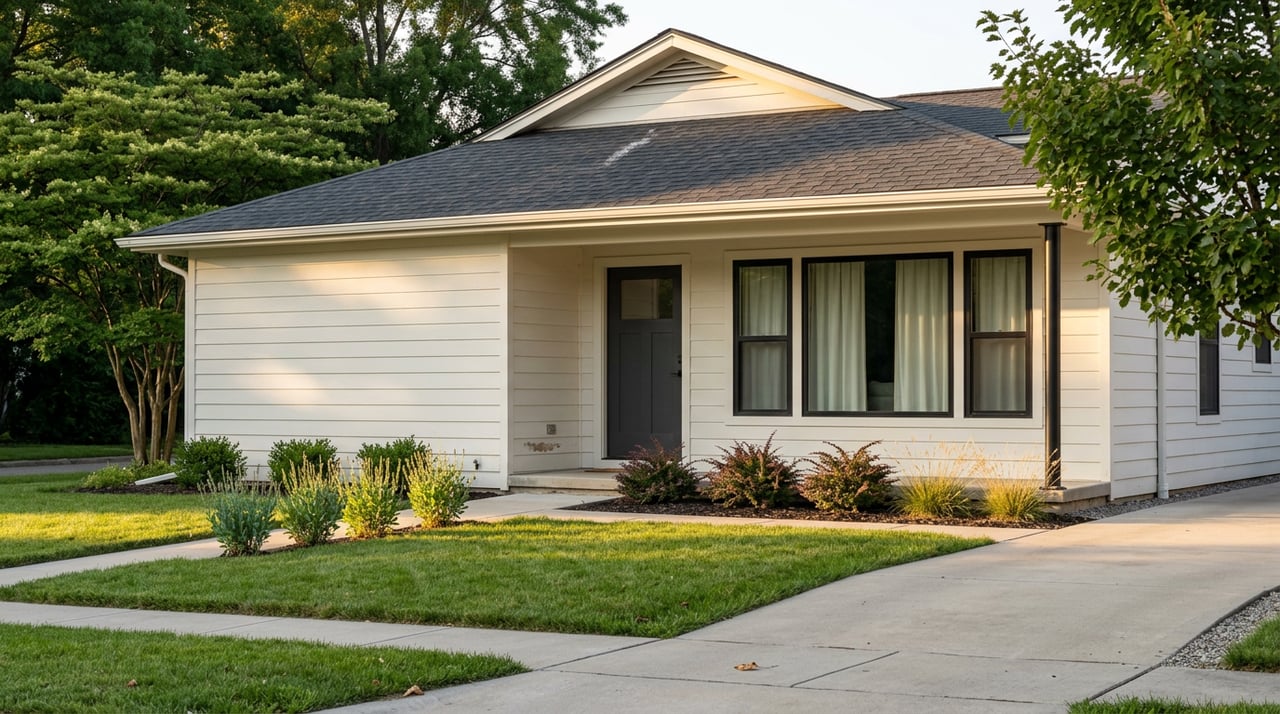
Walk the current Main Street strip and you can count the businesses without running out of fingers: The Ravington, Challulajah Bakery, Marrs Mercantile, Davitt Electric, and the plastics manufacturer Bemco, clustered around the old city hall building. It's a small footprint, and city planners know it. That's precisely why the new master plan splits the city into an "Old Town" north of Centerton Boulevard, focused on preserving what's already there, and a "New Town" to the south, built from open fields.
There's a piece of history in that Old Town block worth knowing too. Long before it was a bedroom community, Centerton carried the nickname "Apple Capital of the World," a title that came from a thriving local apple industry. Tree disease and the Great Depression ended that run, but the old F. Ernst Evaporator Building, referenced in the city's own downtown planning documents, is a physical remnant of that history sitting inside the same footprint now being redrawn for restaurants, retail, and multi-family housing. Most people driving Main Street today have no idea they're passing what's left of a fruit industry that once defined the town.
If the rest of this loop feels like it's about to change shape, Centerton Day isn't going anywhere. The city's annual celebration returns for its 49th year this September, with the Centerton Day Pageant scheduled for 7 p.m. on Friday, September 11, 2026, at 210 Captain Kelley Drive, a street formerly known as Municipal Drive before its recent renaming. The day itself carries the traditions residents already expect: a Fireman's Pancake Breakfast and a full slate of community activities that have run nearly half a century without interruption.
For a city that's still figuring out what its downtown will look like in five years, Centerton Day is the one piece of civic life that's already fully formed. It doesn't need a master plan. It just needs a Saturday in September, same as it has for 49 years running.
None of this is static. The city's population estimate reached 23,953 as of the Census Bureau's 2023 count, up from roughly 490 residents in 1990, and that growth is exactly why the downtown planning process exists in the first place. Centerton's master plan, developed in partnership with the Urban Land Institute's Northwest Arkansas chapter, moved through its second of three phases in mid-2026, working out zoning, connectivity, and a regulatory framework for the New Town Center area. Planners have described building at heights of three to six stories once that area develops, with retail and restaurants at street level and residential or office space above, plus a real town square as the eventual centerpiece.
That's still on the drawing board. What's not on the drawing board, what already exists and doesn't require a bond vote or a construction timeline, is the loop you can walk this weekend: a fish hatchery trail nobody put on a brochure, a farmers market that occasionally moonlights as a public meeting, an Old Town block with a fruit-industry ghost still standing in it, and a festival that's been showing up every September since long before anyone drew a map of a New Town.
The city is right that Centerton doesn't have a downtown yet in the way Bentonville or Rogers does. But it already has a Saturday. Most residents just haven't walked all four pieces of it back to back.
If you're weighing what a home in Old Town versus the New Town Center footprint might mean for your own plans, or you're curious how Centerton's growth compares to neighboring markets, Sammie Beaver can walk you through what's actually changing on the ground, block by block, before you make a decision based on a map that's still being drawn.
Whether you're buying, selling, building, or simply exploring your options, I’m here to offer personalized guidance, creative insight, and local expertise every step of the way.
Address
809 S 52ND ST
ROGERS AR 72758